
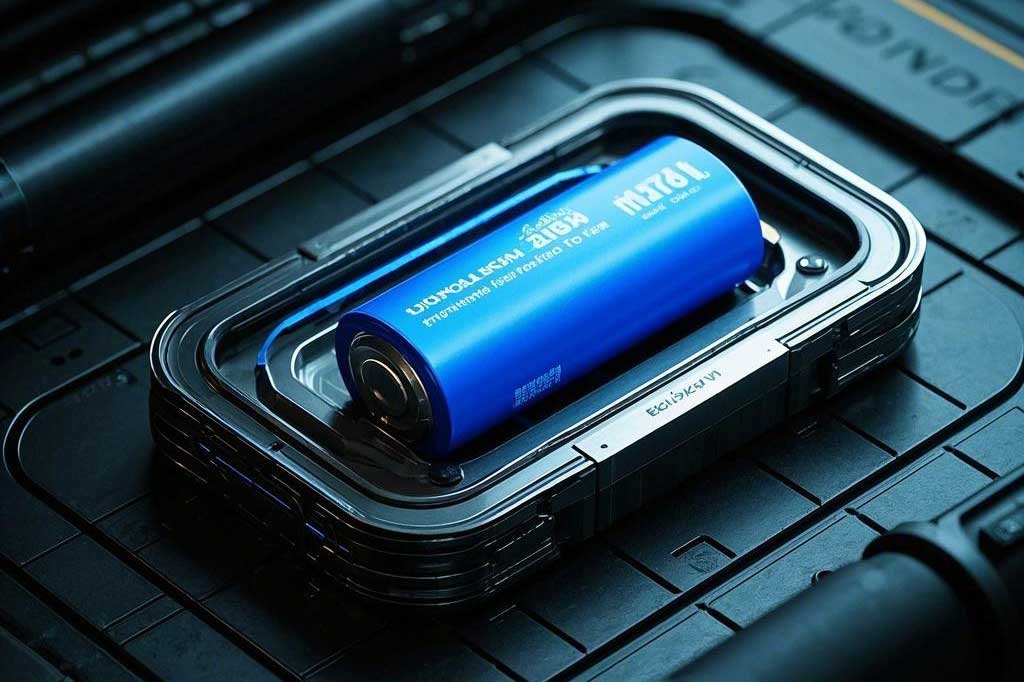




Lithium Iron Phosphate (LFP) batteries have become an indispensable asset to the clean energy sector due to their safety, durability, and cost-effectiveness. This blog examines four critical dimensions of LFP battery technology, discussing advancements, challenges, and opportunities through data and trustworthy sources.
LFP Batteries for Electric Vehicles: Applications and Performance Optimization
LFP batteries have become an increasingly popular choice in the EV market due to their stability, longevity, and cost-efficiency. Although LFP batteries have lower energy density compared to nickel-cobalt-manganese (NCM) batteries, their superior safety and thermal management make them ideal for entry- to mid-level models of electric vehicles.
Recent advances have focused on increasing energy density. According to research published in Nature Energy (2023), nanostructuring techniques and doping with high-capacity materials have increased LFP battery energy density by 20%. This is evidenced by Tesla and BYD utilizing these technologies, with Tesla’s Model 3 setting benchmarks for battery efficiency while BYD’s Blade Battery sets new standards in energy density performance.
Battery Management Systems (BMS) with enhanced capabilities have also improved charging speeds and cycle life, according to data from EV-Volumes (2023). LFP-equipped EVs have demonstrated a 15% longer lifespan compared to traditional battery chemistries, offering both environmental and economic benefits.
Advantages and Challenges of LFP Batteries in Energy Storage Systems
LFP batteries have become the backbone of grid-scale energy storage systems (ESS) in the renewable energy sector, serving as a cornerstone for stabilizing renewable sources like solar and wind power. Their long cycle life—often exceeding 4,000 cycles—makes them reliable options for energy storage.
Wood Mackenzie (2023) projects that global ESS installations powered by LFP batteries will surpass 200 GWh annually by 2030. This growth is attributed to LFP’s superior cost-to-performance ratio and reduced environmental impact, as seen in a Texas pilot project that demonstrated LFP-powered ESS achieving an impressive 98% operational efficiency over three years.
However, challenges remain: LFP batteries tend to have lower energy density than their NCM counterparts and require more physical space to deliver the same energy output. Additionally, their performance at low temperatures is an ongoing issue, with efficiency dropping by 15-20% below freezing temperatures. Researchers are exploring hybrid chemistries to overcome these limitations.
Recent Innovations and Supply Chain Optimization in LFP Battery Production
LFP batteries are produced through an intricate combination of material science and engineering. The success of LFP batteries relies on the synthesis of their cathode material using high-temperature sintering, nanotechnology, and carbon coating techniques to enhance conductivity and stability.
Benchmark Mineral Intelligence (2023) reports that improvements in cathode synthesis have enabled manufacturers to meet surging demand for LFP batteries without compromising quality, resulting in a 10% reduction in costs year-on-year.
Supply chain management also plays a crucial role. China currently dominates the LFP supply chain, accounting for 75% of total production capacity. To reduce dependency, companies in North America and Europe are investing in localized production. ABF recently unveiled plans to open a $1 billion LFP production facility by 2026 to increase domestic output.
Recycling and Reusing LFP Batteries to Achieve Sustainability
As LFP batteries gain increasing adoption, so does the need for sustainable recycling and reuse strategies. Unlike NCM batteries, which contain cobalt for recycling, LFP batteries do not contain this metal, making their recycling process less resource-intensive and more environmentally friendly.
Circular Energy Storage (2023) reports that current recycling methods can recover 95% of lithium and 98% of iron from LFP batteries for reuse. Startups like Redwood Materials are developing closed-loop systems that incorporate recovered materials back into new production lines, thereby cutting costs and emissions by up to 30%.
One key challenge in recycling LFP materials lies in their chemical stability, which makes the extraction process more energy-intensive. However, hydrometallurgical recycling offers promising solutions, achieving high recovery rates with reduced environmental impacts.
Conclusion: LFP Battery Technology Shows Promise for the Future
Lithium Iron Phosphate (LFP) batteries are revolutionizing industries ranging from electric vehicles to renewable energy storage, thanks to advancements in performance, manufacturing, and recycling capabilities. As we move toward more sustainable energy futures, LFP technology stands poised to lead the way.
Researchers and manufacturers can unlock the full potential of LFP batteries by addressing issues related to energy density, low-temperature performance, and recycling efficiency, positioning LFP batteries as integral components of global clean energy solutions.